Safety Alert: If you are in danger, use a safe or private computer that an abuser does not have direct or remote access to. Learn more about technology safety at techsafety.org. NDDSVC does not provide direct services to victims and survivors. Contact a DV/SA advocacy center near you to get help. If you are in immediate danger, call 911.
When we hear about someone in an abusive relationship, the first question many people ask is, “Why don’t they just leave?”
But leaving an abusive relationship is not a simple decision. For many victims, it’s not “just leaving.” It’s a terrifying balance of actions and consequences. Behind every delay or hesitation is a web of fear, uncertainty, and survival strategy:
What if no one even believes my partner was abusive? How will I afford rent, food, childcare, and other expenses on my own? If I leave, will I lose my friends, my family, my community? Where would I even go if I left? If I do go, what will my partner do if they find me? What if they try to kill me when I leave? What if they hurt my children to get to me?
What if, what if, what if.
It begs the question, is the chance of a better life worth walking across a field of landmines, where every step could bring even more danger?
In victim services work, instead of asking victims to brave the field alone, we ask how we can build a bridge over it. In other words, instead of asking, “Why do they stay in that relationship?” we ask, “What do they need to leave?” And while every situation is different, there are some common factors that can help a person escape an abusive relationship:
Support from family members, friends, and neighbors
Available space at a domestic violence shelter or other safe shelter
Police, prosecutors, and judges who believe them
Understanding and support from doctors, psychologists, faith leaders, social service workers, and teachers
Access to advocates who can help with obtaining protection orders, mental health support, and safe shelter
Access to money, bank accounts, and/or financial information to support themselves and their family without the abuser’s contributions
And perhaps most importantly, institutional enforcement that ensures the abuser will leave them alone after they leave, like enforcing protection orders and criminal laws.
If someone you know is experiencing domestic violence, you may not be a law enforcement officer that can help enforce their protection order. You may not be a victim advocate that’s trained in providing trauma-informed emotional support. You may not be a medical provider that can treat their injuries.
But you can be someone they can lean on when they’re ready to leave.
In honor of Domestic Violence Awareness Month this October, we encourage everyone to be like that support person. Be the person that holds a go-bag for a friend. Be the family member that keeps copies of their important documents. Be the acquaintance that gives them a safe place to stay while they plan for what’s next.
Because when you fall down, a strong safety net makes all the difference.
If you or someone you know has experienced domestic or sexual violence, free and confidential help is available 24/7. Visit the North Dakota Domestic & Sexual Violence Coalition (NDDSVC) website to find a domestic and sexual violence advocacy center near you.
We see you, we support you, and you are not alone
To victims and survivors across North Dakota,
As the news reveals more about Ray Holmberg’s decades-long abuse and exploitation of men and boys, we—the undersigned advocacy and service organizations for survivors of sexual and domestic violence, child abuse, neglect, and human trafficking—want to speak directly to you.
We know this is a difficult time. The graphic details emerging through the news cycle, social media, and local discussions have created a wave of renewed pain and trauma for many. If you are feeling triggered, anxious, angry, heartbroken—or simply numb—you are not alone. These are normal reactions to traumatic events, and you do not need to walk through this alone.
For many survivors, hearing stories about violence and abuse can reopen old wounds or create new ones. It can feel as if your own experience is being dragged back into the light, without your consent. We want you to know: Your reaction is valid. Your experience is valid. Your pain is real. And your story matters.
You are not responsible for what happened to you. You are not defined by the choices of the person who hurt you. What someone did to you does not diminish your worth. You deserve safety, dignity, and love in every relationship you have—always.
If the headlines have felt like too much, it’s okay to step away. Turn off the news, unfollow triggering content, and log off social media if you need to. Taking a break is not avoidance; it is an act of self-preservation. Protecting your mental and emotional health is a powerful and necessary form of self-care.
Speaking of care—know that help is available across our state. There are advocates, counselors, and therapists trained in trauma-informed care who are ready to listen without judgment and support your healing journey. Whether what happened to you occurred last week or decades ago, whether you’ve told your story before or never shared it with anyone—you matter. And we are here for you.
If you’re not ready to reach out to a professional, consider talking with someone you trust. Conversations with supportive people—friends, family, community members—can be a great way to de-stress and work through what you’re feeling. And if someone you speak to isn’t able to offer you the care or understanding you need, it’s OK to set boundaries. You deserve to feel safe and supported in your relationships.
Finally, we want you to know you are not forgotten. Our organizations exist because we believe in a better world for you. We fight every day to end the cycles of violence and exploitation that have caused so much harm. We advocate for justice, for change, and for compassion—not just in times of crisis, but every day. And we will keep showing up, because your life and your healing are worth fighting for.
Generative AI has accelerated the creation of sexually explicit deepfakes. What can be done?
While manipulating intimate images and videos is not new tactic used by sexual violence perpetrators, the recent expansion of generative artificial intelligence (AI) for consumer use has accelerated the creation of nonconsensual manipulated intimate materials, or sexually explicit “deepfakes.”
Deepfakes include imagery, video, or audio that is produced or distributed without the consent of the subject and has been altered, potentially with artificial intelligence, to make it appear that a person is nude, partially nude, or engaged in sexual conduct. To be clear, there are also deepfakes that are not sexually explicit, like the ones depicting politicians. However, when we say “deepfakes,” we’re referring to sexually explicit deepfakes.
In the past, celebrities and public figures were the most common targets for deepfakes. Perpetrators once needed hundreds of photos to create a deepfake. Now, with generative AI, a deepfake can be created with just a single photo, making anyone a potential victim.
Victims of deepfakes often experience severe emotional distress and financial or reputational burdens. Victims may be threatened with physical or sexual violence. They may lose their job. They may pay thousands for an attorney, mental health support, or to websites that monitor the internet for deepfakes to remove them. Some victims have died by suicide.
If you’ve been a victim of a deepfake, know that it was not your fault. This is something that’s done to you, not something that you caused. We all have a right to access our phones, social media accounts, or dating apps without experiencing sexual violence.
Technology and AI themselves are not the problem though. Bad actors misusing them to abuse, threaten, and exploit others are. The good news is that there are steps we can take to prevent the creation and distribution of sexually explicit deepfakes.
AI platforms need to have rules and guidelines in place to prevent the creation of deepfakes. Social media platforms need to have an easy way to report abuse, and they need to dedicate resources to removing sexual content. We know that platforms have a streamlined process for quickly reviewing and removing content for copyright purposes. They need to show the same dedication to removing nonconsensual intimate images.
In North Dakota, lawmakers are actively working to prevent the creation and distribution of sexually explicit deepfakes. Sharing intimate images without or against consent is already against the law in North Dakota, and House Bill 1351 would make it a class A misdemeanor to produce, distribute, or transmit sexually explicit deepfake images or videos.
As individuals, we need to report deepfakes or other nonconsensual intimate material when we see it. We need to talk to our loved ones about online sexual violence and what warning signs to look out for so that we can report perpetrators before further abuse happens. Anyone can be a victim of a deepfake, but teens and young people are particularly vulnerable. If you’re a parent, talk to your kids about deepfakes and why creating and sharing them is harmful. Teach technology safety and make sure your children know that they can come to you for help if something happens to them. April is Sexual Assault Awareness Month, so there is no time like the present to start these conversations.
Finally, as North Dakotans, we need to examine how we think about and treat people online. We have a culture of “North Dakota nice,” but does that culture remain behind closed doors? The ultimate solution to ending the creation and distribution of deepfakes starts with asking ourselves, “Why are these images and videos being created in the first place?” Many perpetrators of deepfakes seek financial gain or power and control over the victim. But once we see our friends, neighbors, and even strangers on the internet as equal, respectable people and not as sexual objects to be consumed, degraded, and profited off of, we will address the root cause of deepfakes and sexual violence as a whole.
If you or someone you know has experienced domestic or sexual violence, free and confidential support is available 24/7. Go to our Find Help page to view a directory of domestic and sexual violence victim advocacy centers and find support near you.
Introducing the North Dakota Domestic & Sexual Violence Coalition (NDDSVC)
For the past year and a half, CAWS North Dakota has been working to rename and rebrand our organization, and I am proud to announce that as of October 16, 2024, we are now the North Dakota Domestic & Sexual Violence Coalition (NDDSVC)! Alongside our rebrand, we’ve completely updated and redesigned our coalition website.
The transition to the NDDSVC name and brand is a significant step towards ensuring greater clarity, simplicity, and recognition for our coalition. With this change, we aim to spend less time explaining who we are and spend more time advocating for victims and survivors of domestic and sexual violence across North Dakota. Our new website is more engaging, user-friendly, and accessible, which will help us connect more people to vital information and resources.
I have great confidence that these changes will advance our efforts toward a future where everyone is safe and lives free from the fear of violence. And please know that while our name has changed, our dedication to ending domestic and sexual violence in North Dakota remains the same. NDDSVC has the same goals, values, services, and staff that CAWS North Dakota did, just with a fresh new look.
As we move forward as the North Dakota Domestic & Sexual Violence Coalition, we’ve been reflecting on the coalition’s forty-six year legacy of combating domestic and sexual violence. We honor this rich history and know that we would not be where we are today without the contributions of the grassroots organizations and pioneering women that came before us and formed our coalition.
As we transition from one name and brand to another, you may see some lingering materials that say CAWS North Dakota on them. We are hard at work converting all of our accounts, documents, stationary, online information, and materials from CAWS North Dakota to our new brand, but this will take time. We appreciate your patience with us in this transition stage!
We encourage you to share this message and tell your community about our new name and website so that they know where to find information and resources from us.
You can support our new brand by calling us the North Dakota Domestic & Sexual Violence Coalition or NDDSVC, checking out our new website, and following us on social media. To help us end domestic and sexual violence in North Dakota, consider making a donation.
Special thanks to our rebrand committee and our consultants at ThompsonStenning for being the creative and thoughtful minds behind our new look. As always, I am also grateful for the work and support of our team, board, members, and allied partners. This exciting new chapter would not have been possible without you!
Together, let’s continue to work toward a violence-free North Dakota.
With gratitude,
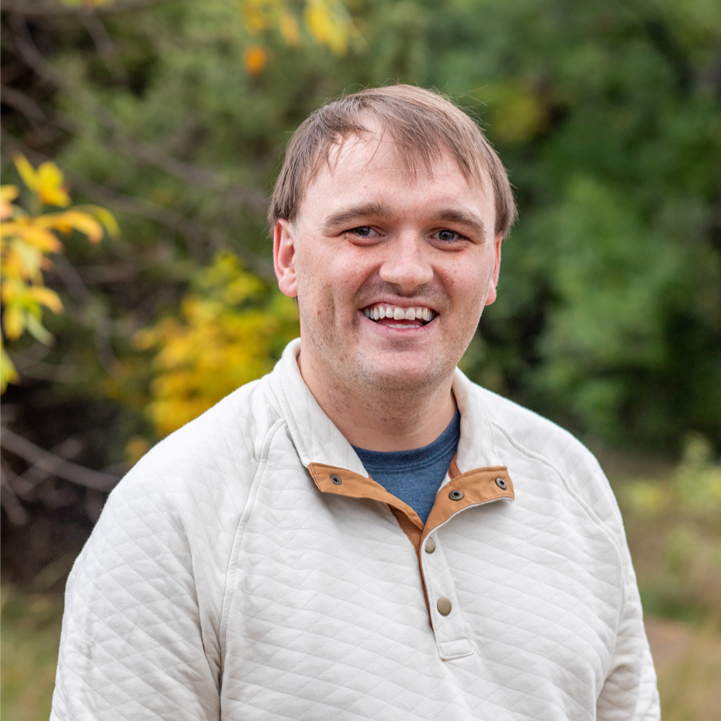
Seth O’Neill Executive Director
Sharron Brady once had to find a safe house for horses.
As the Project Director of Kedish House in Ellendale, part of her job was to help safe house victims of domestic violence. And oftentimes, as many domestic violence victim advocates will tell you, pets are also abused in homes where there is domestic violence.
Sharron recalled many times where she found safe housing arrangements for victims and their families, including pets like dogs, cats, birds, fish, and yes, horses. When necessary, she even safely housed victims and survivors in her own home.
“There was a lot less money back then,” she said, referring to the amount of funding Kedish House once had. “I used to safe house people at my house because it was some place to put them when we didn’t have money to put them in a motel or anything.”
In the case of the horses, Sharron said that other arrangements were made with a friend of the victim to keep them safe.
“I never did have to actually do that,” she said, referring to getting the horses to a safe home. “But I did find a place for them.”
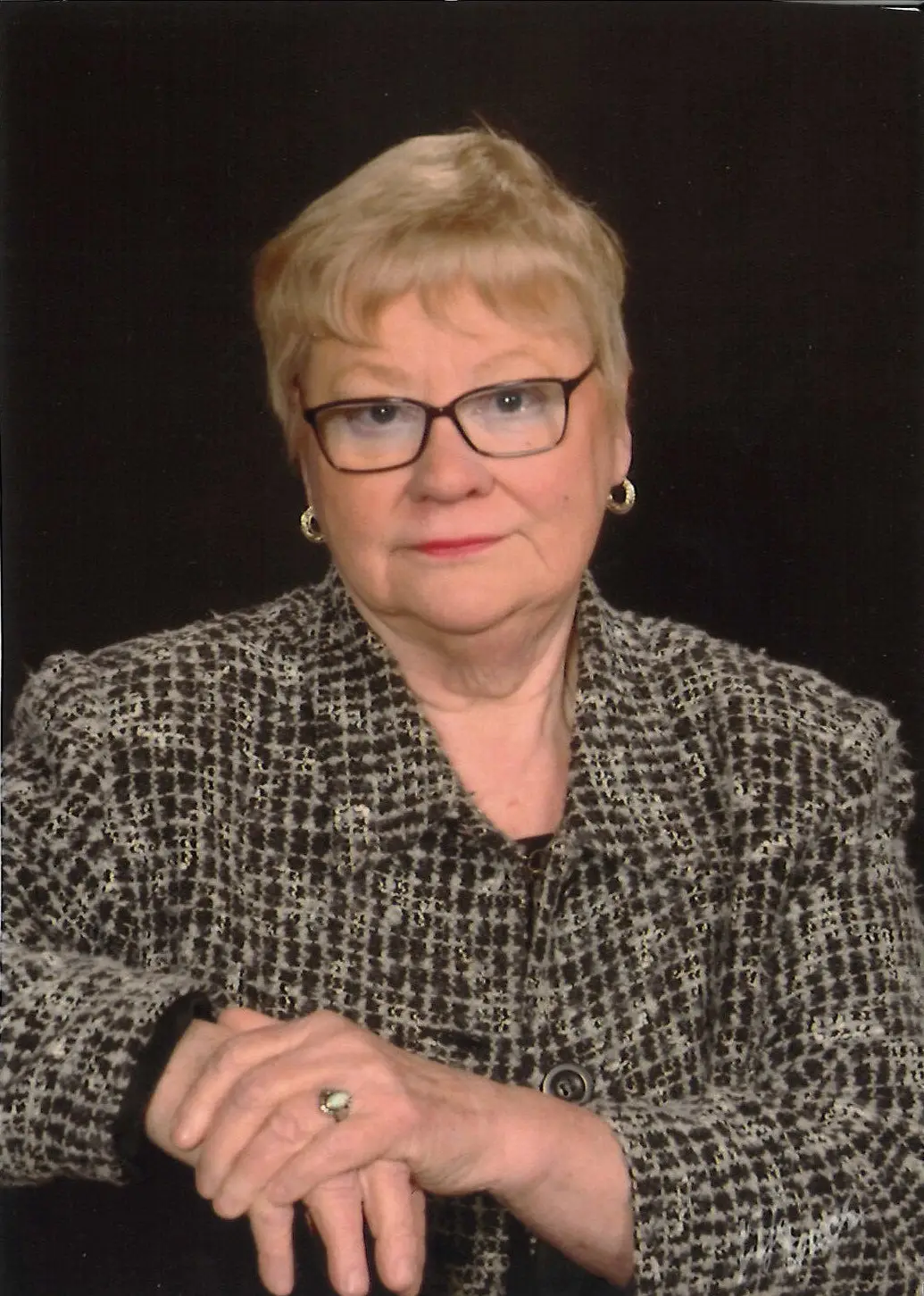
Now, after 37 years with the organization, Sharron is retiring from Kedish House. The former director said that she’s proud of how the organization has evolved from being thought of as “this scary place that breaks up families” to one that is recognized and supported by its community.
The early years
When she first began working at Kedish House, Sharron didn’t know much about domestic violence or sexual assault. She had previously been working for a lawyer who helped with Kedish House’s tax work and nonprofit status paperwork. The founding director of Kedish House, Sandi Lanes, would stop by the lawyer’s office often and would talk with Sharron about the work that she was starting.
Sharron kept in touch with Sandi, and later, when Sharron was attending Northern State University in Aberdeen, SD, she found out through one of her classes that she could work at Kedish House while earning college credit. She quickly became heavily involved with the organization, and after about a year of working with Sandi, Sharron became the director of Kedish House.
She said that a lot has changed since then, primarily the public’s perception of domestic and sexual violence.
“Domestic violence back then was something that was very hidden. [It] wasn’t talked about or anything,” she said. “When I first started, if I went to do a booth at an event or something, I finally discovered I had to offer some prizes to get anybody to even come up to my booth and talk to me or anything…I think they just felt that if anybody saw them come over to the booth, that meant they were talking to me about something they shouldn’t be.”
She said that now, through training and public education, awareness around domestic and sexual violence has certainly improved.
“It is seldom I do a presentation that someone doesn’t come up to me and relate about a person they know who has experienced domestic violence,” she said.
Sharron recalled one of those presentations as a time she will never forget.
She was cleaning up her things after a presentation when a man approached her and said, “I really want to thank you for doing what you’re doing. I think if there were services like this that would have been available when my sister was being abused, that she’d still be alive.”
“And I can remember being very, very shocked when he told me that,” Sharron said. “I said, ‘Well, I just really am sorry that, you know, there wasn’t something back then that could have helped her.’”
She said that things have gotten better over the years due to more education and abuse being talked about in the media. She explained that now, there are very few people in her community who haven’t heard of Kedish House and the work that they do.
And education and awareness aren’t the only things that have gotten better over the years. Sharron said one of the things that she is most proud of is how far Kedish House itself has come from its origins. When the organization first started, it was a lone desk in a corner of a church.
“It was a big old wooden desk with no storage space in it,” Sharron said with a laugh.
She said that Kedish House wasn’t able to find a building that it could afford for many years, but they were able to rent and eventually buy the building that they are currently in after some time.
“When we bought the building, and we had an actual home…I was pretty proud of that,” she said.
But Sharron hasn’t forgotten an important piece of Kedish House’s history.
“I still use that desk,” she said, referring to what was once the only marking of Kedish House’s existence.
Facing challenges
While she has seen progress in many areas over the years, she does still have some concerns about the movement against domestic and sexual violence. She noted that working alongside the criminal justice system has been challenging at times.
“More recently, with some of the court decisions I see, or judges not signing restraining orders or protection orders and other things on the news, it feels like we are going backwards in the justice system at times,” she said. “It is discouraging to victims to leave a bad situation after they have finally been able to make that decision, only to find there is not a protection order to help them feel more safe.”
Sharron also said that advancements in technology have made navigating abusive situations more complex. GPS trackers and other monitoring devices were once things that she never would have thought of, she said. She said at times it can feel like just as one problem is solved, another arises, but Sharron is still hopeful about facing new challenges.
“We’re going to deal with all those things just like we have in the past with some of the things that we’ve dealt with and made better,” she said.
‘Guiding lights’
Sharron’s work was supported by many people and organizations, both in her community and across North Dakota.
She said she admires her community partners, particularly law enforcement and medical professionals, who are responding to crisis situations every day. She said that she depended on them many times, and the work they do is not easy.
She said churches, local businesses, and community members are a big help to Kedish House. They have volunteered, attended events, and donated food, money, and furniture in order to help Kedish House help victims.
Sharron cited Bonnie Palacek and Myrt Armstrong as strong advocates for women and leaders in her work.
Bonnie Palecek was the founding director of the North Dakota Council on Abused Women’s Services, now known as CAWS North Dakota. CAWS North Dakota is the state coalition working to end domestic and sexual violence. The coalition supports 19 domestic violence/sexual assault victim advocacy centers across the state, including Kedish House.
Myrt Armstrong worked as the Executive Director of the Mental Health Association of North Dakota for many years.
Both women dedicated much of their lives to advocating for those who are most vulnerable in society. They supported victim advocates, wrote and lobbied for legislation, and raised money to help those in need. Their leadership empowered many others, including Sharron, to do the same.
“Those two women were my guiding lights to follow,” she said.
Advice for new advocates
Sharron estimates that she helped about 3,700 people during her time with Kedish House, a number she said she was shocked with once she thought about it. She said that helping people go on to hopefully live a better life always made her feel good, but it wasn’t always easy.
“It takes courage to be involved in some of the things I’ve witnessed. Sometimes I’ve been in danger and have been threatened myself and sought restraining orders,” she said.
Despite this, her core message to new advocates is to not give up or get discouraged.
“Life can take some very strange curves sometimes and you can feel that a situation is impossible to help, but there is always that hope that I’ve somehow, in some small way, assisted that victim and their kids to have a better life,” she said.
Sharron said that sometimes we help people without even knowing that we’ve helped them. Abuse can go on for several generations if help is not received, she said, and helping a family escape violence can lead the children to grow up to be in healthy relationships instead of abusive ones.
She said that for new advocates, there are going to be discouraging things that happen along the way, but she wants them to know that the joy and happiness she has seen through her work has made it worth it.
“Those sleepless nights and all the stress is worth it when I see smiles where once there was only tears,” she said.
Donate Now
Thousands of North Dakotans experience domestic and sexual violence each year. But together, we can change that. By giving to NDDSVC, you’re helping us prevent future violence and providing life-saving resources to North Dakota communities.
If you are in an unsafe or abusive situation, there are 18 domestic violence/sexual assault (DV/SA) victim advocacy centers across North Dakota that can help you navigate your options and stay safe. Each center is staffed with professionals who can help you with safety planning, finding shelter, obtaining a protection order, and more.




 Stay Connected
