Safety Alert: If you are in danger, use a safe or private computer that an abuser does not have direct or remote access to. Learn more about technology safety at techsafety.org. NDDSVC does not provide direct services to victims and survivors. Contact a DV/SA advocacy center near you to get help. If you are in immediate danger, call 911.
HomeNews and EventsCelebrating Darianne Johnson: A Mother, Advocate, and Leader
Celebrating Darianne Johnson: A Mother, Advocate, and Leader
September 1, 2026
Announcements, Blogs, Spotlight
Johnson is retiring after 25 years with the Domestic Violence and Rape Crisis Center in Dickinson.
Darianne Johnson describes herself as a “farm girl” who grew up “not very outgoing” and “lived in the middle of nowhere,” so how did she come to find herself working with the Dickinson police chief and becoming friends with landlords?
Today, as the Director of the Domestic Violence and Rape Crisis Center (DVRCC) in Dickinson, Johnson often finds herself in situations she never expected to be in. She never set out to become an advocate for victims of violence, but around the year 2000, after spending some time at home with her youngest child, Johnson was looking for a job.
Johnson’s sister, Janine, had worked for DVRCC for around 10 years already, and she mentioned to DVRCC’s then-Director, Roberta Biel, that her sister was looking for work. Biel didn’t have a position available to offer Johnson, but she was able to connect her to an open position with the North Dakota Council on Abused Women’s Services (NDCAWS), now known as the North Dakota Domestic & Sexual Violence Coalition (NDDSVC). Johnson began working for the state coalition as the Rural Specialist.
In her role, Johnson drove around Beulah, Hazen and the surrounding areas. She interviewed people about what they thought about domestic violence. After around a year in this position, she knew it wasn’t the right fit for her.
“I’m not a person to just go and cold talk to people,” she said.
But then, a position opened at DVRCC, and Biel reached out to Johnson to see if she was still interested. Johnson took the job and has worked for the crisis center ever since. And now, after 25 years with the organization and eventually ascending to the role of Director, Johnson plans to retire from DVRCC on September 7, 2026.
Darianne Johnson (Photo provided by Darianne Johnson)
‘I knew I’d found my calling’
As an advocate, Johnson helped victims navigate abusive relationships and heal after sexual assault. She helped them find safe shelter, obtain protection orders, access mental health support and more.
For some, constantly helping people in crisis would be a hard job, but for Johnson, she had found where she fit.
“I knew I’d found my calling,” she said. “It was very easy for me to start helping and help them make their lives better.”
Twenty-five years later, Johnson said she still remembers the name of her first client from 2001.
And while it was easy for Johnson to help people, she said it takes a special kind of person to be a successful advocate.
“I think people that make the best advocates, first of all, you have to have been through something yourself. I mean, if you lived a charmed life, you probably, you know, may not be the best advocate,” she said.
Understanding hardship is just one piece of the advocate puzzle. Johnson added that motherhood is often a trait she sees in the best advocates.
“I think it’s helpful if you’ve been a mom or if you are a mom. Because as a mom, you know that you have to just keep trying, keep looking, keep searching, whatever it is for your kids. If they’re sick, you’ve got to take them to the doctor. If the doctor doesn’t tell you what you think is right, then you go to somebody else,” she said. “And it’s the same thing with advocacy. You know, if something doesn’t work, well, then you try something else. Or you look for something else, or somebody else that can maybe pick up the piece that you know you’re not understanding.”
The life of an advocate
Johnson credits being a mother as helping her succeed as an advocate, but at times, it was difficult separating work from her home life.
Johnson recalled staying at DVRCC’s office until 4 A.M. some nights, and she missed family events to respond to crisis calls. She had found her calling, but a calling doesn’t always recognize regular business hours. Her family learned quickly that she could be approached by someone looking for help at any time.
“You have to train your family too,” she said. “My kids were in junior high and high school when I started this position. And you can teach them really quickly to just disappear. If somebody comes up to me in Walmart and starts talking, they just knew. They just disappeared.”
She also saw her work and home life blend in her violence prevention work.
“I was the mom that was going into the schools and giving presentations on dating violence. You know, I gave that presentation to all my kids, of course, with all of their friends knowing that I was their mom,” she said.
But again, Johnson found that being a mom was one of her greatest strengths. Years after her oldest son was out of high school, one of his former classmates came to DVRCC looking for her.
Johnson remembered, “She asked for me. And she said, ‘I know you’re Darren’s mom and I know you’ll help me. And so that’s why I asked for you. And I’m in a bad situation, so will you help me?’”
These full circle moments are what give meaning to Johnson’s work.
“It was really cool that she felt like she could trust me just from going in and talking to them at the school,” she said.
An unexpected leader
Johnson worked as an advocate at DVRCC for many years, and she was content to continue doing so.
“I never, ever had plans of becoming the director,” she said.
But around 2008, Johnson recognized the crisis center was at a turning point. Roberta Biel had gotten sick and was unable to continue working, so the organization began the search for a new Director. Johnson reviewed the applications coming in, and she began to worry.
“As I read the applications, they were all very centered on making money and administrative and [had] very little empathy. You know, the way their applications came across was that they had never worked with a victim. And I thought, what is this place going to become if they don’t understand the cycle of violence? If they don’t understand how many times women go back, how many times children get hurt and how to help?” she said.
Johnson struggled with the idea of DVRCC becoming a place where people wouldn’t feel comfortable getting help, she said. After a few weeks of deliberation and talking with her husband, she decided to apply for the Director position, and she got it.
As an advocate, Johnson managed a caseload. As a director, she was now managing grant applications, an entire staff, a board of directors, relationships with community partners, and running an organization. She described this shift in responsibilities as “nerve-wracking” at first.
“I was brought up a farm girl. Not very outgoing, lived in the middle of nowhere,” Johnson said. “It’s not like we were able to go to a lot of things and do a lot of things because we were in the middle of nowhere. And so it was a huge, huge change for me to all of a sudden be sitting with the police chief, or the sheriff or just about anybody.”
Over time though, Johnson learned to navigate her many professional relationships. She made a point to get to know people, gain their respect and show that they could respect her, she said. If that didn’t work, Johnson emphasized that being straightforward and honest are often the keys to navigating any conflict.
“One thing I am above anything else, and you can ask anybody, is honest,” she said with a laugh. “My saying is, say what you mean and mean what you say.”
She recalled a time DVRCC had a problem with some local landlords.
“And so we went and sat down with them. And by the time we left, we were best friends,” she said. “Sometimes it’s just letting the other people know your limitations and finding out what their limitations are.”
There’s no ‘I’ in team
There is no doubt she means it when Johnson says she is proud of her staff.
“I don’t do this job by myself. I couldn’t do this job by myself. We do this job together.And I’ve learned as I get older to listen to the younger people because they have great ideas. Sometimes they get a little crazy, you know, but we can tamper it down a little bit and find a middle ground and say, ‘You know, that might just work,’” she said. “But if I tried to run this place by myself, there’s no way it would run for a day. I completely lean on them for their opinions, for their ideas on case management, on their ideas of ‘What do you think we should do?’”
Some of Johnson’s staff have worked with her for over 15 years. Long enough, she said, that they feel less like colleagues and more like family.
“We have laughed together, we have cried together. We’ve been in each other’s lives for so long that we’re all family,” Johnson said
She also said her team is truly dedicated to their work.
“One thing that all of these girls do have is dedication. I mean, they are dedicated to doing whatever they can do to help people,” she said. “They go over and above.”
Johnson’s praise extended to her board of directors, too.
“They are phenomenal,” she said.“I think, no, I know that every person here would not even think twice about going and talking to a board member if there was something bothering them. I mean, they’re just, they’re all so approachable and they’re all so understanding and they all know and understand what we do.”
When acknowledging that Johnson is at the center of this incredible staff and incredible board of directors and surely had a role in creating this impressive culture, she shakes the compliment off with a laugh.
“I don’t do well with praise,” she said.
Doubling capacity
One of Johnson’s proudest accomplishments came in 2018 when DVRCC built their new shelter.
“We were originally in a four-bedroom house to house 18 people. And then the offices were on the bottom level. And so, I mean, there were two bathrooms. For 18 people,” she said.
Today, DVRCC’s new shelter has doubled their capacity to help people. The new shelter can house at least 28 people, and Johnson said depending upon the situation, they can house even more. In the new shelter, they have trundle beds, so if a mother with small children arrives, the children can sleep on trundle beds. These special beds help add to the shelter’s capacity, and Johnson said for several months last year, DVRCC had 50 people in their shelter.
Looking back, Johnson said she has no idea how they made do with only being able to house 18 people before.
“There was one morning that we woke up, and a family had come in the night and we had a pullout couch. And every single member of that family was on that couch. I think there were about 16 of them. There were babies, there were women, there were little kids,” Johnson said. “We just didn’t have enough room to serve anymore.”
Now, DVRCC’s shelter has 14 rooms, with a bathroom between each room. And according to Johnson, they still need more space. The community’s need for shelter is only growing, and DVRCC works tirelessly to find people a place to stay when they are at capacity.
“We work with everybody that we can to try to find them a place. I mean, that’s what we do. We never, or we try to never, turn anyone away. We try to find something,” Johnson said.
‘They should really have been FBI agents’
When Johnson thinks about the future of victim advocacy, she foresees challenges that she never had to face.
“I think that it’s going to be a lot harder for these guys than it was for me,” she said. “There was no such thing as a cell phone or immediate access to everything when I started.And now, you barely get out of court and people are calling people. And so I think they’re going to have more and different challenges than we had.”
But Johnson is confident that her team is up to the task. She said her team is the smartest group of people she knows.
“I always tell them they should really have been FBI agents is what they should have been. Because they can figure anything out,” she said. “But I know it’s not going to be easy for them.”
Johnson also said she wants future advocates to remember to give themselves some grace because being an advocate is not an easy job.
“You can try to save the world, but you may not be able to, so let that go and give yourself some grace,” she said.
Looking forward
In her retirement, Johnson is looking forward to spending time with her grandchildren.
“I’ve missed a lot of their things, and I don’t want to miss any more. So to be able to spend time with my family, my grandkids—I better say my family too, because they always say that, you know, I don’t love them anymore and I just want the grandkids,” she said with another laugh.
“And to spend time with my husband,” she added. “We have both worked since we were old enough to work. And so it’s time for us to have a little time.”
Johnson said there are too many people to thank in the city of Dickinson and the surrounding counties for the support they have given her over the last 25 years, but she wants them to know how much she appreciates them.
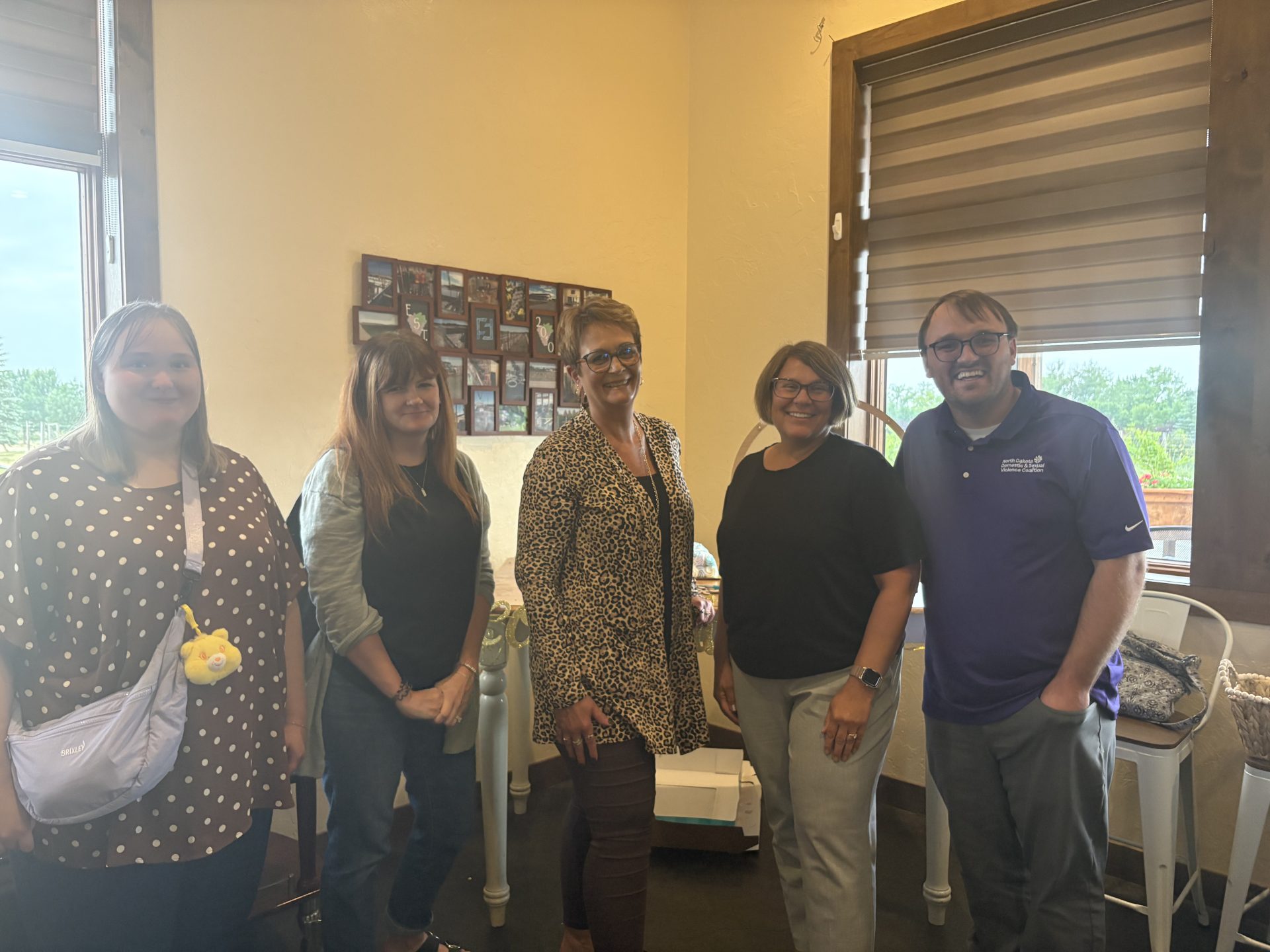
North Dakota Domestic & Sexual Violence Coalition (NDDSVC) staff alongside Darianne Johnson at her retirement party. (Photo provided by Seth O’Neill)
Though she is sad to leave DVRCC, Johnson knows she is leaving it in good hands. Kayla Messall, DVRCC’s current Site Manager/Direct Service Provider, will be taking on the role of Director upon Johnson’s retirement. Messall has worked alongside Johnson for many years; when she takes over on September 7, 2026, it will be exactly 15 years from when Messall was first hired at DVRCC.
“She’s awesome. She’s funny. She won’t stop till she gets it done,” Johnson said of Messall. “She’s a team player, and she wants the best of the team right beside her. She’s made that clear from the very beginning.”
“And,” Johnson added, “She’s a great mom.”
For Messall, she knows she has big shoes to fill.
“I don’t think I can personally describe or explain how much we will miss her here,” Messall said of Johnson.
Messall said the DVRCC team has come to rely on Johnson’s leadership and guidance, and while she is excited to lead the organization into the future, she said the team is also already grieving the loss of Johnson’s steady support and patience.
“It’s not like we’re just coworkers and she’s just our boss. Through all of the really difficult times in life, everybody has been there for each other,” Messall said. “We were there for her, and she was there for us through all of our difficult moments. Truly I’ve never had a boss like Darianne.”
Similar to Johnson, Messall said she never thought she would end up leading the crisis center.
“Before Darianne found me, I felt very lost. I was like, ‘What am I going to do with my life?’ Nothing was really calling out to me,” Messall said.
Messall had first been working as a barista when she met Johnson. She made her coffees for years, and while she came to know Johnson’s coffee order, she never knew what Johnson did for work. Messall eventually moved to working in retail and continued to run into Johnson in her new job.
“When she would do her shopping, she always came to me to check out,” Messall said. “She came in one day and was like, ‘I need you to work for me,’ and not even thinking about, ‘Where do you even work?’ I was like, ‘Okay, sure.’ And she said ‘Perfect, I’ll call you on Monday.’”
Johnson did in fact call Messall on Monday, and she asked Messall to come in for an interview. At that point, Messall asked, “By the way, where do you work?”
Then, it was Messall’s turn to find her calling.
“I found who I was as a person when I started working here,” Messall said. “I grew to really have a passion for helping victims specifically. People that needed help finding their voice, or just somebody standing behind them saying, ‘You can do this,’ and I just felt that’s where my heart is.”
Much like Johnson, Messall loved working with victims and was happy to continue working in her role. But much like Johnson, Messall worried about the organization when it was time for somebody new to become DVRCC’s Director. She feared someone would take over the organization who didn’t have the compassion that it takes to work with victims of violence.
“I didn’t want to change what Darianne had going. She built a really good foundation,” Messall said. “[Victims] feel welcome here. It feels like a home. It doesn’t feel like a ‘facility.’”
Messall wants to keep building on that foundation. She said she wants to continue DVRCC’s relationships with other community agencies and make them stronger where she can.
When asked what she had learned in working with Johnson, Messall came prepared with a list, including contributions from DVRCC’s staff.
The list stated:
“Things we learned from Darianne,
Family comes first
A dollar donation is just as meaningful as $1000.
Be respectful to everyone, you never know when you will end up needing them. You also don’t know what they have been through.
It will all be ok.”
Likewise, Johnson said she has learned a lot from working at DVRCC. She credits the organization for making her into the person she is today.
“It’s given me confidence. It’s given me friends that I never would have had. It’s given me courage to do things that I never thought I could do,” she said.
And though Johnson said she does not believe she changed the world, she has certainly made it better. She said a client she worked with 17 years ago called her just two weeks prior to being interviewed for this story.
“That was awesome,” Johnson said. “It was awesome to hear her voice. It was awesome to know that she was in a much better place.”
Johnson has helped thousands of victims and survivors across the state, and although her work is coming to an end, her impact is sure to be felt for many years to come.
“I came from a naive little farm girl and became the director of a program that has helped thousands of people,” she said. “And for that, I’m really proud.”
It is with profound sadness that we share the news of the passing of Tara Muhlhauser, former Executive Director of North Dakota Domestic & Sexual Violence Coalition. Tara joined NDDSVC (then known as CAWS North Dakota) as the Executive Director...
If 2024 was the year of change for this coalition—a new name, a new logo, a new executive director—2025 was the year that we hit the ground running. We called this year’s annual report “Growing Season” because it summed up 2025 perfectly; our team has grown, and so has our impact. We hosted more trainings, provided more technical assistance, advocated for more state funding, provided more legal assistance, and reached more people than ever through our awareness efforts.
The latest fact sheets show that 6,218 victims of domestic violence and 1,309 victims of sexual assault were served by advocacy centers in 2025, a 1.8% and 3.9% decrease from 2024 respectively.
Thousands of North Dakotans experience domestic and sexual violence each year. But together, we can change that. By giving to NDDSVC, you’re helping us prevent future violence and providing life-saving resources to North Dakota communities.
If you are in an unsafe or abusive situation, there are 18 domestic violence/sexual assault (DV/SA) victim advocacy centers across North Dakota that can help you navigate your options and stay safe. Each center is staffed with professionals who can help you with safety planning, finding shelter, obtaining a protection order, and more.


 September 1, 2026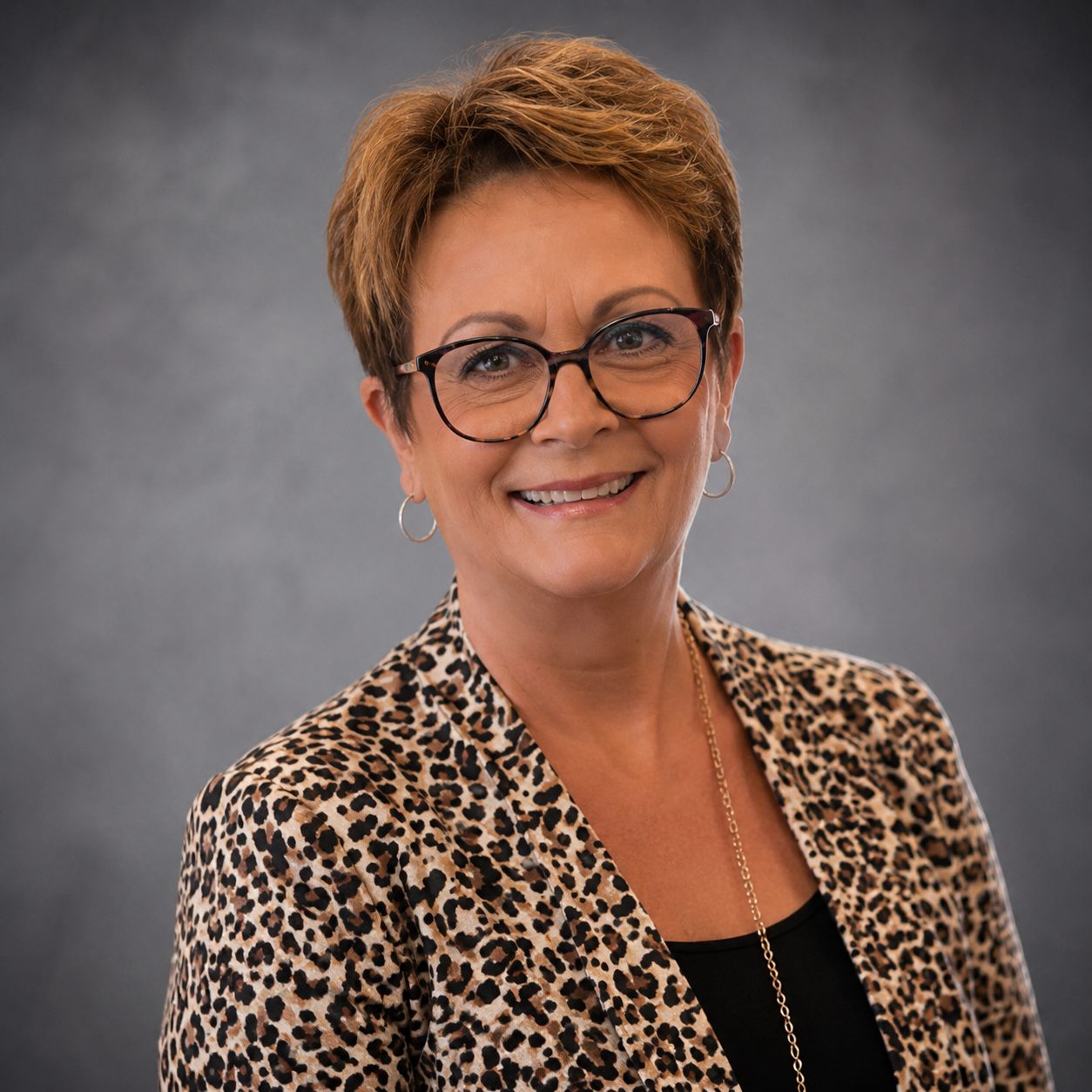
 Related posts

 Stay Connected
